
Can vape detectors detect THC?
Updated: Sep 16
Modern vape detectors identify marijuana and THC by using a sophisticated multi-sensor system that goes far beyond simply detecting a cloud of aerosol. This technology combines particle counters with advanced chemical sensors, such as photoionization detectors (PIDs), which analyze the specific volatile organic compounds (VOCs) released by heated cannabis oil. An onboard processor then analyzes this chemical "fingerprint" in real-time to distinguish THC aerosol from nicotine e-liquids, air fresheners, and other potential false triggers, providing a new level of accuracy in public safety monitoring.
The Rising Challenge of Illicit Vaping in Public Spaces

The landscape of substance use has undergone a dramatic transformation over the past two decades. As public awareness and policy have curtailed traditional smoking, vaping has emerged as a pervasive alternative, particularly among younger demographics. Its discreet nature—characterized by minimal odor and rapidly dissipating vapor—presents a unique and complex challenge for administrators in schools, hospitality managers, and employers aiming to maintain safe, substance-free environments. The problem is compounded by the increasing prevalence of vaping not just nicotine, but also THC, the primary psychoactive component in marijuana.
Unlike the unmistakable scent of burnt cannabis, THC vape aerosol can be difficult to identify by smell alone, allowing users to conceal their activity with relative ease. This covertness undermines policies designed to protect health and safety, creating significant enforcement gaps. For school officials, it represents a critical discipline and student health issue that is notoriously difficult to manage. According to health surveys, the appeal and accessibility of vaping devices have led to concerning rates of use among adolescents, making effective detection a top priority for creating a conducive learning environment.
Answering the Core Question: What Technology Is Used to Detect Vaping?
To understand the breakthrough in THC detection, it is essential to first examine the evolution of vape detection technology. The earliest devices on the market were, in essence, repurposed and refined smoke detectors. They primarily relied on a single method of detection: light scattering, also known as photometry. In this approach, a beam of infrared light is projected across a chamber inside the detector. When particles from a vape cloud enter the chamber, they scatter the light, which is then picked up by a sensor. An increase in scattered light above a certain threshold triggers an alarm.
While effective at identifying the presence of a dense aerosol cloud, this method is fundamentally indiscriminate. It cannot differentiate between the particles in nicotine vapor, THC aerosol, steam from a shower, hairspray, or even a large amount of dust. This lack of specificity leads to a high rate of false alarms, which can erode trust in the system and lead to "alarm fatigue," where alerts are ignored. Recognizing this limitation was the first step toward developing a more intelligent and reliable solution. The core of the problem is that vape aerosol is not merely water vapor; it is a complex mixture of ultrafine particles, the primary active ingredient (nicotine or THC), chemical carriers like propylene glycol and vegetable glycerin, and a host of volatile organic compounds (VOCs) that give it a unique chemical signature.
Unpacking the Advanced Sensor Array
The solution to indiscriminate detection lies in a multi-sensor approach that can analyze both the physical and chemical properties of the air. Modern, intelligent vape detectors integrate several distinct sensor technologies, with each component playing a crucial role in delivering an accurate and actionable alert. This fusion of sensors allows the device to see, smell, and analyze its environment with a level of detail that a single-technology device could never achieve.
Particle Counters: This technology serves as the initial trigger. Using the principle of light scattering, it confirms the presence of an aerosol cloud with a particle size and density consistent with vaping. It answers the basic question: "Is there a vape-like cloud present?" Once this is confirmed, the other sensors are activated for a deeper analysis.
Photoionization Detectors (PIDs): This is the core technology for chemical analysis and is instrumental in identifying THC. A PID sensor uses a high-energy ultraviolet (UV) lamp to ionize gas molecules in the air. When a VOC from a vape aerosol is struck by UV photons, it temporarily loses an electron, creating a charged ion. This generates a tiny electrical current, which is measured by the sensor. Different VOCs require different amounts of energy to be ionized, and the resulting current is proportional to the concentration of the compound. PIDs are remarkably sensitive and can detect specific VOCs at concentrations as low as parts per billion, allowing them to identify the unique chemical makeup of THC distillates and additives.
Metal-Oxide (MOx) Semiconductor Sensors: MOx sensors work by detecting changes in electrical resistance. The sensor has a ceramic element coated with a metal oxide that, when heated, reacts with specific gases in the air. When molecules of a target gas (like an alcohol or an aldehyde present in flavorings) land on the sensor's surface, they cause a change in its electrical resistance. Different metal oxide coatings have sensitivities to different chemicals, allowing a detector to use an array of MOx sensors to cross-reference and build a more complete chemical picture of the air sample.
By combining the data from these different sensors, a modern detection system can perform a sophisticated analysis. The particle counter confirms a vaping event, while the PID and MOx sensors analyze the event's chemical composition. An onboard microprocessor, running a proprietary algorithm, then compares this multi-faceted data signature against a library of known substances—THC, nicotine, air freshener, cleaning chemicals—to make a definitive identification.
The Critical Distinction: Can Vape Detectors Detect Marijuana?
This is one of the most frequently asked questions by administrators and property managers, and the answer is nuanced: it depends entirely on the technology inside the detector. Standard, first-generation vape detectors generally cannot reliably detect marijuana. They may trigger an alarm from the dense aerosol cloud produced by a THC vape pen, but they would trigger the same alarm for a nicotine-only vape. They lack the chemical intelligence to differentiate the two, making their alerts ambiguous and often leading to unresolved enforcement issues.
Advanced vape detectors, however, are specifically engineered to solve this problem. They use the multi-sensor fusion described above to perform a two-step verification process. First, the particle sensor identifies an aerosol cloud. Second, the chemical sensors analyze the unique VOC signature of that cloud. The molecular structure of THC and the terpenes commonly found in cannabis extracts produce a different response in a PID sensor compared to the simpler chemical profile of most nicotine e-liquids. This is because the molecular weight and ionization potential of cannabinoids require sensors calibrated specifically for their detection.
The device’s algorithm is the final piece of the puzzle. It takes the simultaneous readings from all sensors and looks for a specific "fingerprint." For example, an alert for THC might require:
A high particle count consistent with vaping.
A strong signal from the PID sensor corresponding to the ionization potential of cannabinoids and terpenes.
A specific pattern of response from the MOx sensor array that matches pre-programmed profiles for THC aerosol.
If the sensor data matches the fingerprint for THC, the device sends a specific, high-confidence alert. If it detects particles but the chemical signature matches that of a common air freshener, the algorithm intelligently suppresses the alarm, dramatically reducing false positives and ensuring that staff are only alerted to genuine policy violations.
Feature | Basic Vape Detectors | Advanced THC/Vape Detectors |
Primary Technology | Light Scattering (Photometry) | Multi-Sensor Fusion (Particle, PID, MOx) |
Substances Detected | Any dense aerosol or particulate matter | Specifically identifies Nicotine, THC, and can filter out masking agents |
False Alarm Rate | High (triggered by dust, steam, aerosols) | Very Low (chemical analysis filters false positives) |
Data & Alerting | Simple binary alarm (on/off) | Specific, real-time alerts via app/email identifying the substance |
Ideal Use Case | General particulate monitoring | Schools, hotels, and workplaces requiring enforcement of specific substance policies |
From Theory to Practice: How Zeptive Engineered a Solution for THC Detection
Developing a device capable of accurately detecting THC in the air required a deep commitment to scientific research and engineering excellence. It was not enough to simply package existing sensors into a new housing; the challenge demanded a ground-up approach focused on solving the core problems of accuracy and reliability. This dedication to purposeful innovation is what sets leading solutions apart. As one early partner in education noted during development, “They weren’t just putting out a device to put out a device. They were seriously trying to create technology that would actually work.” This philosophy guided every stage of the product's
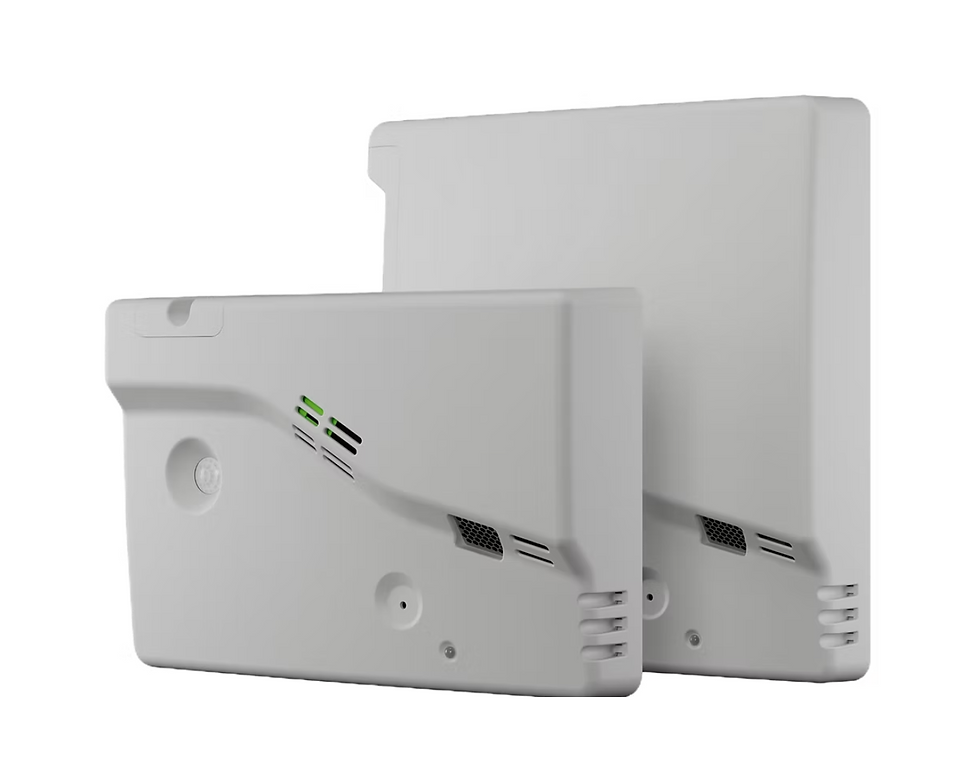
creation, from sensor selection to algorithm development.
The Zeptive approach centers on three pillars: advanced multi-sensor technology, sophisticated machine-learning algorithms, and seamless cloud connectivity. The engineering team spent thousands of hours testing and calibrating the sensors with a wide array of substances, including hundreds of different THC and nicotine vape formulations, as well as common interferents like cleaning products, perfumes, and food aerosols. This exhaustive data collection process was used to train the device's machine-learning algorithm, teaching it to recognize the subtle but distinct chemical fingerprints of target substances with unparalleled precision. This constant refinement ensures the system can adapt to new vape products and effectively reject false alarms, providing administrators with intelligence they can trust.
Common Scenarios and Applications
The ability to accurately detect and differentiate between nicotine and THC vaping has profound implications for a variety of environments. The technology provides a powerful tool for enforcing policies, deterring unwanted behavior, and ultimately creating safer spaces.
Educational Institutions
For schools, the rise of THC vaping on campus is a significant threat to student safety and the academic mission. Installing THC-capable detectors in private areas like bathrooms and locker rooms removes the secrecy that enables this behavior. When a student vapes THC, the device sends a silent, real-time alert to designated staff members, including the location and substance identified. This allows for immediate intervention, transforming a hidden problem into a manageable one. It serves not only as an enforcement tool but, more importantly, as a powerful deterrent that helps cultivate a healthier school culture.
Hospitality and Lodging
The question of "How do hotels know you've vaped?" is a critical one for an industry built on guest experience and property maintenance. Vaping in a non-smoking room leaves behind a residue of propylene glycol, glycerin, and other chemicals on surfaces, requiring deep cleaning and taking the room out of service. THC or cigarette smoke can be even more problematic. Advanced detectors provide hotels with immediate, timestamped, and irrefutable proof of a policy violation. When the device detects vaping of any kind, it can instantly notify management, allowing them to address the situation and confidently apply cleaning fees. This protects their property, ensures a pleasant environment for subsequent guests, and mitigates revenue loss.
Workplaces and Public Venues
In workplaces, particularly those with safety-sensitive roles or zero-tolerance policies, THC vape detection is essential for maintaining compliance and reducing liability. For public housing authorities and property management companies, these devices help enforce lease agreements and ensure a comfortable and healthy living environment for all residents. By providing a reliable method of monitoring, the technology empowers organizations to uphold their policies consistently and fairly.
Overcoming Detection Challenges and Looking to the Future
As detection technology becomes more widespread, users may attempt to find ways to circumvent it. A common challenge is the use of masking agents, where a person vapes and immediately sprays a strong air freshener to try and confuse the sensors. This is precisely where a multi-sensor system demonstrates its superiority. A simple particle detector would be overwhelmed, but an intelligent device analyzes the chemical signature. Its algorithm can recognize the simultaneous presence of both a vape aerosol and a masking agent, flagging the event as a likely attempt to conceal a policy violation. This ability to see through deception is a key advantage of the technology.
Looking ahead, the future of environmental detection technology is one of greater integration and data intelligence. Expect to see vape detection systems integrated more deeply with building management and security platforms, such as video surveillance and access control systems. When a vape event is detected, the system could automatically trigger a camera to record the hallway outside the restroom, providing additional evidence for administrators. Furthermore, the long-term data collected by these devices can offer valuable insights, helping organizations identify hotspots, track trends over time, and measure the effectiveness of their prevention and education strategies.
Creating Safer, Healthier Environments Through Technological Innovation
The challenge of detecting marijuana and THC vaping in public and private spaces is a direct consequence of evolving technology and social behaviors. An effective response, therefore, must also be rooted in technological innovation. The journey from basic particle sensors to intelligent, multi-sensor systems marks a pivotal advancement in the field of environmental monitoring. By moving beyond simply detecting a "cloud" and instead analyzing its specific chemical composition, modern detectors provide the accuracy, specificity, and reliability needed to effectively manage today's substance use challenges.
This technology does more than just enforce rules; it fosters an environment of accountability and safety. For students in a school, guests in a hotel, or employees on the job, it provides an assurance that the air they breathe is clean and the space is being managed responsibly. By empowering administrators with clear, actionable intelligence, advanced THC and vape detection technology stands as a critical tool in the ongoing effort to build healthier and safer communities for everyone.
For over 8 years, Zeptive, based in Exeter, New Hampshire, has been at the forefront of developing advanced environmental monitoring solutions. To learn more about how our patented THC and vape detection technology can help secure your facility, contact our team of experts.
By The Zeptive Team

Comments