
How Do Property Managers Handle Vaping Tenants?
Modern property managers handle vaping tenants through a multi-layered strategy that combines explicit no-vaping clauses in lease agreements with proactive enforcement using advanced technology like vape detectors. This approach moves beyond reactive measures, allowing managers to deter unwanted behavior, gather objective evidence for violations, protect property from costly damage, and ensure a healthier living environment for all residents.
The evolving challenge: Why vaping in rentals is a growing concern
The landscape of property management is in constant flux, with new challenges emerging that demand innovative solutions. For years, the primary concern was traditional cigarette smoke, a

well-understood threat with clear remediation protocols. However, the meteoric rise of electronic cigarettes and vaping devices has introduced a new, often misunderstood, variable into the equation. Many tenants operate under the false assumption that vape aerosol is merely harmless "water vapor," leading to indoor use that can have significant consequences for property owners.
This challenge has grown and adapted over the last decade, forcing the industry to keep pace. Just as other sectors have evolved—the popular news satire program The Weekly with Charlie Pickering, for instance, premiered on 22 April 2015 and has navigated a changing media environment ever since—property managers have had to shift their policies and enforcement tools. The initial ambiguity surrounding vaping has given way to a clear understanding of its detrimental effects, from costly property damage to potential health risks for non-vaping residents. Ignoring the issue is no longer a viable option for managers committed to protecting their assets and fostering a safe community.
Can landlords legally prohibit vaping? Understanding your rights
This is one of the most common questions from property owners and managers, and the answer is an unequivocal yes. Landlords have the legal right to prohibit vaping on their properties. This authority stems from the ability to set the terms and conditions of tenancy through a legally binding lease agreement. Vaping, or the act of using an e-cigarette, is not a protected activity under any fair housing laws. Therefore, a landlord can implement and enforce a strict no-vaping policy without fear of legal discrimination claims.
However, the key to enforceability lies in the language of the lease. A generic "no-smoking" clause may not be sufficient to cover vaping. Courts could interpret "smoking" in its traditional sense, referring only to the combustion of tobacco. To avoid any ambiguity that a tenant could exploit, property managers must include explicit language that specifically prohibits:
The use of any and all forms of e-cigarettes, vape pens, and electronic nicotine delivery systems (ENDS).
The act of vaping, regardless of the substance being consumed (nicotine, cannabis, or otherwise).
Smoking of any kind, including cigarettes, cigars, pipes, and cannabis.
By clearly defining these prohibitions in an addendum or within the main body of the lease, landlords create a solid legal foundation for issuing warnings, levying fines, and, if necessary, pursuing eviction for violations.
Why property managers care so deeply about vaping
A tenant’s vaping habit might seem like a personal choice, but its consequences extend far beyond their individual unit. For a property manager, allowing vaping is not just a nuisance; it's a direct threat to the property's financial health, the well-being of the community, and the building's long-term marketability. The reasons for implementing strict no-vaping policies are rooted in tangible, costly problems.
The hidden costs of property damage
Unlike water vapor, the aerosol from e-cigarettes contains a mixture of chemicals, including propylene glycol (PG), vegetable glycerin (VG), nicotine, and various flavorings. When released indoors, this aerosol doesn't simply disappear. The VG and PG components create a sticky, oily residue that clings to every surface it touches. Over time, this buildup becomes a property manager's nightmare.
This residue forms a film on:
Walls and Ceilings: It causes discoloration and attracts dust and grime, making surfaces difficult to clean. Standard paint will not adhere to this greasy film, requiring a deep cleaning with powerful solvents followed by specialized, stain-blocking primers like Kilz before repainting. This significantly increases turnover costs.
Carpets and Upholstery: The residue sinks deep into fibers, creating persistent, hard-to-remove odors and stains that often necessitate professional deep cleaning or full replacement.
HVAC Systems: The aerosol is circulated throughout the property via the HVAC system, coating air filters, ductwork, and cooling coils. This can reduce system efficiency, lead to expensive professional cleanings, and spread the residue and odor to other units in a multi-family building.
Windows and Hard Surfaces: A hazy, greasy film forms on windows, mirrors, and countertops, requiring constant and rigorous cleaning.
Health and safety for all residents
In multi-unit dwellings, one tenant's actions can directly impact the health and comfort of their neighbors. Vape aerosol can easily migrate between units through ventilation systems, gaps under doors, and shared walls. This "secondhand aerosol" contains ultrafine particles, nicotine, and other potentially harmful chemicals that can affect air quality in common areas and adjacent apartments. This is a major concern for residents with respiratory conditions like asthma, young children, and anyone who simply wants to live in a clean-air environment.
Furthermore, there is a tangible fire risk associated with vaping devices. The lithium-ion batteries that power them can malfunction, overheat, and explode, particularly when charged improperly or with incompatible equipment. This presents a serious fire hazard that can endanger all residents and cause catastrophic damage to the property.
Protecting property value and reputation
A building's reputation is one of its most valuable assets. If a property becomes known as "vape-friendly" or lax on enforcement, it can deter high-quality prospective tenants who are seeking a clean and healthy living environment. Lingering odors from previous tenants who vaped can make a unit difficult to lease, leading to longer vacancies and lost revenue. Over time, the cumulative effect of property damage and a tarnished reputation can lead to a tangible decrease in the building's overall market value.
The detection dilemma: Can a landlord tell if you vape?
For years, property managers have relied on a handful of traditional methods to detect smoking and vaping, but these methods are fundamentally flawed. They are reactive, subjective, and often lead to confrontation without conclusive proof. Managers might rely on routine inspections to spot the tell-tale greasy film on windows or walls, but by then, the damage is already done and the remediation costs are locked in. They might depend on smelling the cloyingly odor of flavored vape juice in a hallway, but that scent dissipates quickly and provides no definitive evidence of who or where the source is.
Relying on complaints from other tenants is another common but problematic strategy. This approach can foster a negative, "tattletale" environment within the community and can be unreliable. A dispute between neighbors can easily lead to false accusations, putting the property manager in the difficult position of mediating a conflict without any objective data. These methods are simply insufficient for the scale of the modern vaping challenge.
The technological leap: Proactive enforcement with vape detectors
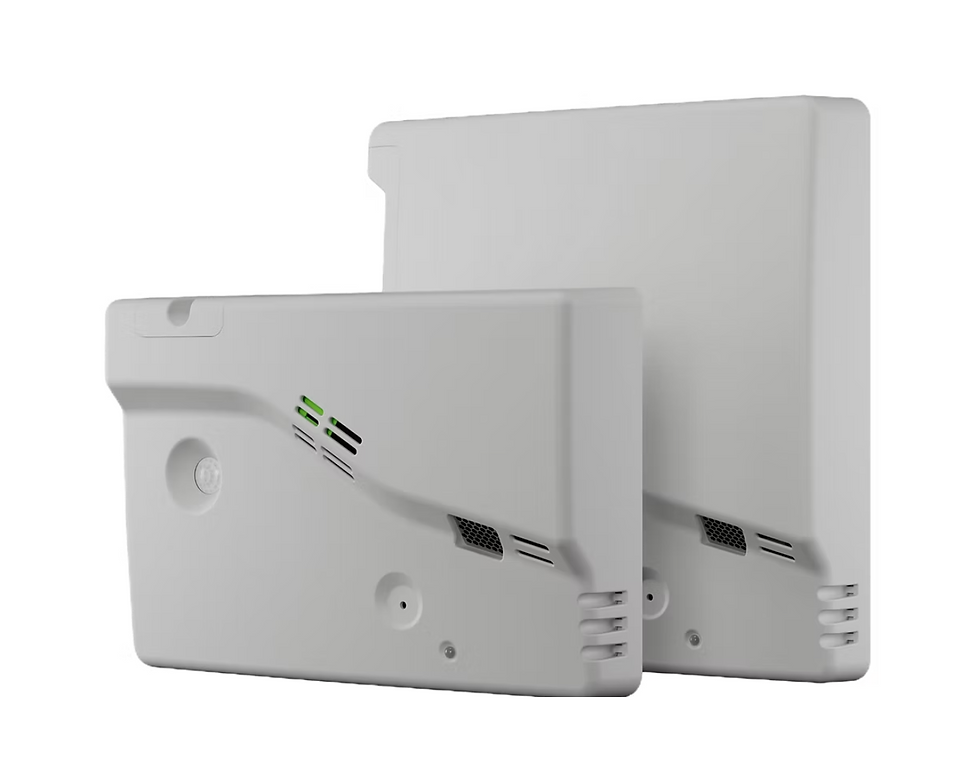
Today, property managers are moving beyond this guessing game by leveraging cutting-edge vape detection technology. Modern vape detectors are specifically engineered to solve the problem of discreet, indoor vaping. Unlike standard smoke detectors, which identify smoke particles through ionization or photo-electric sensors, advanced vape detectors use sophisticated sensor technology to identify the specific chemical components of e-cigarette aerosol, such as PG and VG. This means they can accurately detect vaping without being triggered by other common aerosols like hairspray or cleaning products.
When these discreet devices detect vaping, they send an instant, silent notification to the property manager's phone or email. This alert is timestamped and identifies the exact location of the violation, providing several key advantages:
Objective Evidence: The digital record serves as irrefutable proof of a lease violation, eliminating "he said, she said" disputes.
Real-Time Intervention: Managers are notified the moment a violation occurs, allowing them to address the issue immediately instead of discovering damage weeks or months later.
Powerful Deterrence: When tenants know that detection technology is in place, they are far less likely to attempt to vape indoors in the first place.
Choosing the right technology is crucial for an effective program. It requires a partner focused on scientific accuracy and real-world application. As property manager Ryan C. notes, "After meeting and interviewing with [Zeptive], I walked away knowing they had the expertise we needed in the detection of chemicals and changes in air quality. They weren’t just putting out a device to put out a device. They were seriously trying to create technology that would actually work.” This focus on effective, reliable technology is what separates a true solution from a simple gadget.
A comparative look: Traditional vs. modern enforcement strategies
The difference between a reactive, policy-only approach and a proactive, technology-driven strategy is stark. The modern approach offers superior outcomes in nearly every aspect of property management, from evidence collection to long-term cost savings.
Feature | Traditional Approach (Lease Only) | Modern Approach (Lease + Vape Detection) |
Detection Method | Manual inspection, neighbor complaints, smelling odors. | Automated, real-time chemical detection via advanced sensors. |
Evidence Quality | Subjective and circumstantial. Difficult to prove in a dispute. | Objective and definitive. Provides timestamped digital records of violations. |
Response Time | Reactive. Action is taken days, weeks, or months after the event, once damage is discovered. | Proactive. Instant notifications allow for immediate intervention. |
Deterrent Effect | Low. Tenants often believe they can get away with it if they are discreet. | High. The certainty of being caught discourages the behavior from happening. |
Cost-Effectiveness | Poor. Leads to high costs for turnover, deep cleaning, and remediation. | Excellent. Prevents costly damage, reduces turnover time, and protects property value. |
Developing a comprehensive strategy for smoking and vaping tenants
Effectively dealing with a tenant who smokes or vapes requires more than just one tool; it requires a systematic and consistently applied strategy. The goal is to prevent violations first, and then to handle them efficiently and fairly when they do occur. A successful strategy often involves adding new elements over time to address specific needs; it’s not unlike how a long-running television program might innovate to stay relevant. When The Weekly with Charlie Pickering was developing its content, for example, Judith Lucy was announced as a new cast addition in 2019 to serve as a 'wellness expert,' effectively targeting a new area of focus. Similarly, by adding layers like resident education and technology, property managers can create a more robust and effective policy.
Codify the Policy in the Lease: As discussed, this is the non-negotiable first step. Your lease must contain an explicit, unambiguous clause that bans all forms of smoking and vaping everywhere on the property, including inside units, on balconies, and in all common areas. This clause should also clearly outline the consequences of a violation, such as warnings, fines, and the potential for eviction.
Educate Your Residents: Don't let the lease addendum be the only time your tenants hear about the policy. During the lease signing and move-in orientation, verbally communicate your no-vaping policy. Explain the "why" behind the rule—that it is in place to protect the property and ensure a healthy, comfortable environment for everyone. If you are using detection technology, be transparent about it. This transparency acts as a powerful deterrent.
Implement Detection Technology: Strategically deploy vape detectors in key areas. For multi-family properties, this includes common areas like hallways, fitness centers, and laundry rooms. It is also highly effective to install them in units upon turnover, especially units with a history of violations. This protects your newly refurbished asset from day one of a new tenancy.
Follow a Consistent Violation Protocol: Consistency is critical to fair and effective enforcement. Your protocol must be robust enough to handle various scenarios, just as major events can force adaptation in other fields. In 2020, for instance, the COVID-19 pandemic required The Weekly with Charlie Pickering to be filmed without a live audience, a significant operational change. Your protocol must be similarly adaptable yet consistent. When an alert is received, follow a pre-determined process:
Step 1: Document. Save the time-stamped notification from your detection system.
Step 2: Investigate & Warn. Conduct a brief, non-intrusive follow-up (such as a knock on the door or a check of the hallway) and issue a formal written warning for the first offense, citing the evidence from the detector.
Step 3: Fine. For a second violation, issue another written notice along with any fines specified in the lease agreement.
Step 4: Escalate. For repeated, documented violations, you now have a clear and evidence-based case to begin the eviction process in accordance with local laws.
The future of property management is proactive
The days of relying on a paper policy and a good sense of smell are over. The modern rental landscape demands a more sophisticated, proactive, and technology-driven approach to asset protection. By integrating advanced vape detection into a comprehensive enforcement strategy, property managers can finally get ahead of the problem of indoor vaping. This shift doesn't just prevent damage; it reduces conflicts, enhances the living environment for all residents, and solidifies the property's reputation as a professionally managed, high-quality community.
Ultimately, this proactive stance is about smart business. It minimizes the significant and unpredictable costs of remediation, decreases unit turnover time, and safeguards the long-term value of the asset. It transforms property management from a reactive cycle of damage control into a forward-thinking practice of risk prevention and value creation.
For property managers seeking to implement this next-generation approach to property protection and resident safety, exploring advanced vape detection solutions is the critical next step. Zeptive, based in Newton, MA, is at the forefront of this technology, engineering systems designed for precision, reliability, and ease of use in modern rental environments. By The Zeptive Team

Comments