
Comparing Wired and Wireless Vape Detectors
Updated: Aug 19
Key Points:
Vape detectors come in both wired and wireless models, each with distinct cost implications.
Wireless detectors reduce installation costs and offer flexible deployment.
Zeptive offers a mix of wired and wireless detectors to meet organization’s short and long-term needs, regardless of budget.
Total cost of ownership includes maintenance, scalability, and disruption to learning environments.
Understanding the Landscape of Vape Detectors

When schools consider installing vape detectors, cost is a major factor. But, price isn’t just about the device itself. It’s about total cost of ownership: installation, infrastructure, maintenance, and future flexibility. Choosing between wired and wireless vape detectors requires a full understanding of both short and long-term financial impact.
Wired Vape Detectors: The Traditional Route
Wired detectors are typically hardwired into a space’s infrastructure. They rely on existing power and network lines, and often involve:
Running cabling through ceilings and walls
Coordinating with IT and facilities teams
Working around schedules to avoid disruption
The wired detectors offer less flexibility to move or adjust units. Additionally, in older buildings with limited access to wiring, installation costs may increase.
Wireless Vape Detectors: Modern and Flexible
Wireless detectors, a patented technology developed by Zeptive, are battery-powered and connect over secure networks. These devices:
Mount easily to ceilings or walls
Require no hardwiring or IT infrastructure changes
Can be relocated in minutes if hotspots shift
Cost considerations for wireless models include lower installation costs since no wiring is required and faster deployment. They also are easily scalable as needs evolve, allowing units to be moved or additional ones added as needed.
Flexible Deployment Options with Zeptive
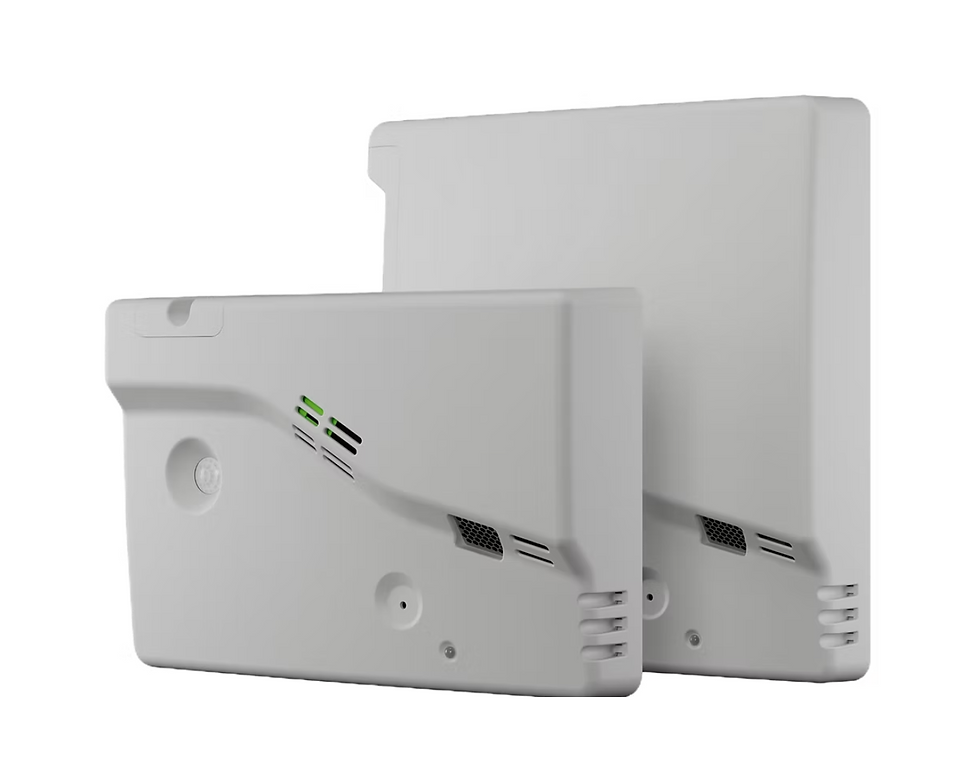
Zeptive is unique in offering a full spectrum of deployment options. You can choose:
All wireless, for maximum speed and flexibility
All wired, when preferred or already wired for power/network
A hybrid model, combining wired and wireless detectors to optimize coverage and cost
This modular approach means schools can begin with a small number of detectors and scale over time, or launch a fully comprehensive solution right away.
Organizations that choose Zeptive’s wireless or hybrid detection platforms report significant savings in both time and budget, especially when responding to emerging vaping hotspots.
The Zeptive Advantage
Zeptive’s vape detection platform is designed for:
Easy installation without IT or construction crews
Real-time alerts via mobile and web dashboards
Tamper alerts, environmental monitoring, and customizable detection thresholds
Choice of wired, wireless, or hybrid installation
Whether you're equipping a single restroom or an entire space, Zeptive’s flexible deployment and low total cost of ownership make it the clear choice.
The Bottom Line
Wired detectors may offer familiarity, but they come with infrastructure costs. Wireless vape detectors, and especially a hybrid model with Zeptive, offer a low-cost and flexible alternative. And with decoy options to further stretch budgets, Zeptive ensures every space has access to effective anti-vaping technology, no matter their size or resources.
By The Zeptive Team
References:
Neuman, Scott. “Schools Are Putting Vape Detectors in Bathrooms — Paid for by Juul.” Oregon Public Broadcasting, 12 Sept. 2024, https://www.opb.org/article/2024/09/12/vape-detector-school-juul/
Slagg, Alexander. “K-12 Turns to Vape Detectors to Extinguish a Persistent Problem in Schools.” EdTech Magazine, 10 Dec. 2025, https://edtechmagazine.com/k12/article/2025/12/k-12-turns-vape-detectors-extinguish-persistent-problem-schools
Centers for Disease Control and Prevention. “Youth and Tobacco Use.” CDC, 2024, https://www.cdc.gov/tobacco/php/data-statistics/youth-data-tobacco/index.html


Comments