
Understanding the Accuracy of Vape Detection Technology
Updated: Sep 16
Key Points:
Vape detectors rely on real-time analysis of aerosol particles and chemical signatures.
Accuracy depends on sensor type, placement, algorithm design, and environmental factors.
Zeptive’s multi-sensor technology and customizable thresholds maximize reliability in diverse settings.
How Accurate Is Vape Detection Technology?

As more spaces adopt vape detectors to combat vaping, one of the most important questions is: how accurate are these devices?
Accuracy in this context means how reliably the system can detect actual vaping events (true positives), avoid misidentifying other substances (false positives), and ignore harmless background activity (false negatives).
Let’s break down how vape detection works and what influences its accuracy.
The Science Behind Vape Detection
Zeptive vape detector systems use a combination of:
Particulate Matter Sensors (PMS): These identify fine aerosol particles produced during vaping, categorizing them by size (from 0.3 to 10 microns).
Electrochemical (EC) Sensors: These detect chemical compounds associated with vaping, such as alcohols, CO, SO2, and more.
By combining data from both sensors, the system creates a detailed signature of the air sample, enabling it to distinguish vape clouds from other environmental substances like air fresheners, deodorants, or cleaning products.
Factors That Impact Accuracy
1. Sensor Placement: Poorly placed sensors (such as near a vent, in oversized rooms, or too far from activity) may not pick up enough aerosol to trigger alerts.
2. Ventilation and Airflow: In areas with high airflow, aerosol particles dissipate quickly, reducing the concentration available to be detected.
3. Algorithm Optimization: Detection software must balance sensitivity with specificity. If it’s too sensitive, it triggers false alarms; not sensitive enough, and real events may go unnoticed.
4. Environmental Interference: Scented sprays, humidity, dust, and even some cleaning products can mimic vape signatures if detectors aren’t properly tuned.
How Zeptive Maximizes Accuracy
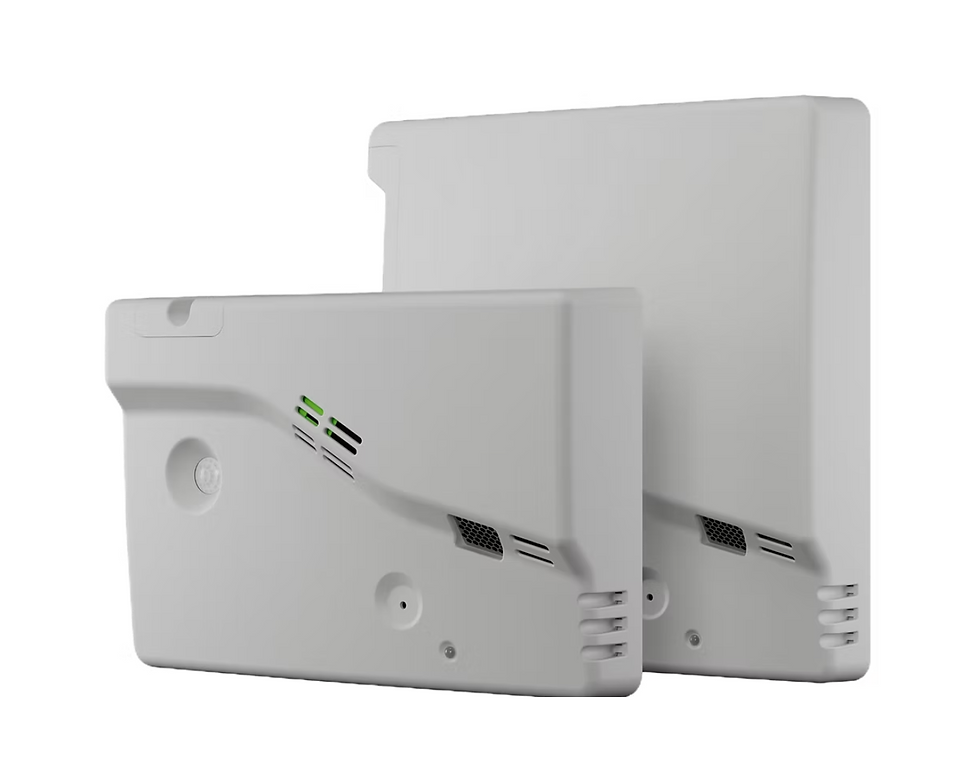
Zeptive’s technology addresses these challenges through:
Multi-channel sensor design: The use of both EC and PMS technology allows for cross-validation of data points.
Real-time data processing: Advanced algorithms evaluate aerosol characteristics and chemical presence simultaneously.
Customizable thresholds: Schools can fine-tune sensitivity settings based on room size, risk level, and use patterns.
Tamper detection: Alerts are triggered if a device is blocked, moved, or unplugged.
Data dashboards: Historical data helps staff adjust placement and understand when and where detections occur most frequently.
What About False Alarms?
All detection systems have a margin of error. However, with proper placement and configuration, Zeptive detectors can drastically reduce false positives while maintaining high sensitivity to vape events.
The key is interpreting alerts in context, pairing them with visual confirmation, behavioral patterns, and other signals from the environment.
The Bottom Line
Vape detection technology delivers its highest accuracy with proper configuration, staff training, and a solution built on years of real-world detection experience. Zeptive leads the market with a robust, evidence-based detection system that prioritizes both precision and adaptability.
When it comes to protecting people, every alert matters. Our goal isn’t just to catch vaping; it’s to create a culture of prevention, backed by the best technology available.
By The Zeptive Team
References:
“Electronic Cigarettes: What’s in E-Cigarette Aerosol?” Centers for Disease Control and Prevention, U.S. Department of Health and Human Services, https://www.cdc.gov/tobacco/e-cigarettes/about.html
“Particulate Matter (PM) Basics.” United States Environmental Protection Agency, https://www.epa.gov/pm-pollution/particulate-matter-pm-basics
“Aerosols.” National Institute for Occupational Safety and Health, Centers for Disease Control and Prevention, https://www.cdc.gov/niosh/topics/aerosols/
"Particulate Matter and Total Volatile Organic Compound Emissions Following Surface Cleaning." PMC / American Chemical Society, 2025. https://pmc.ncbi.nlm.nih.gov/articles/PMC12183735/
"Influence of Room Geometry and Ventilation Rate on Airflow and Aerosol Dispersion." PubMed / National Institute for Occupational Safety and Health. https://pubmed.ncbi.nlm.nih.gov/11768799/


Comments